Lost on Azhdahak: The 2014 Adventure
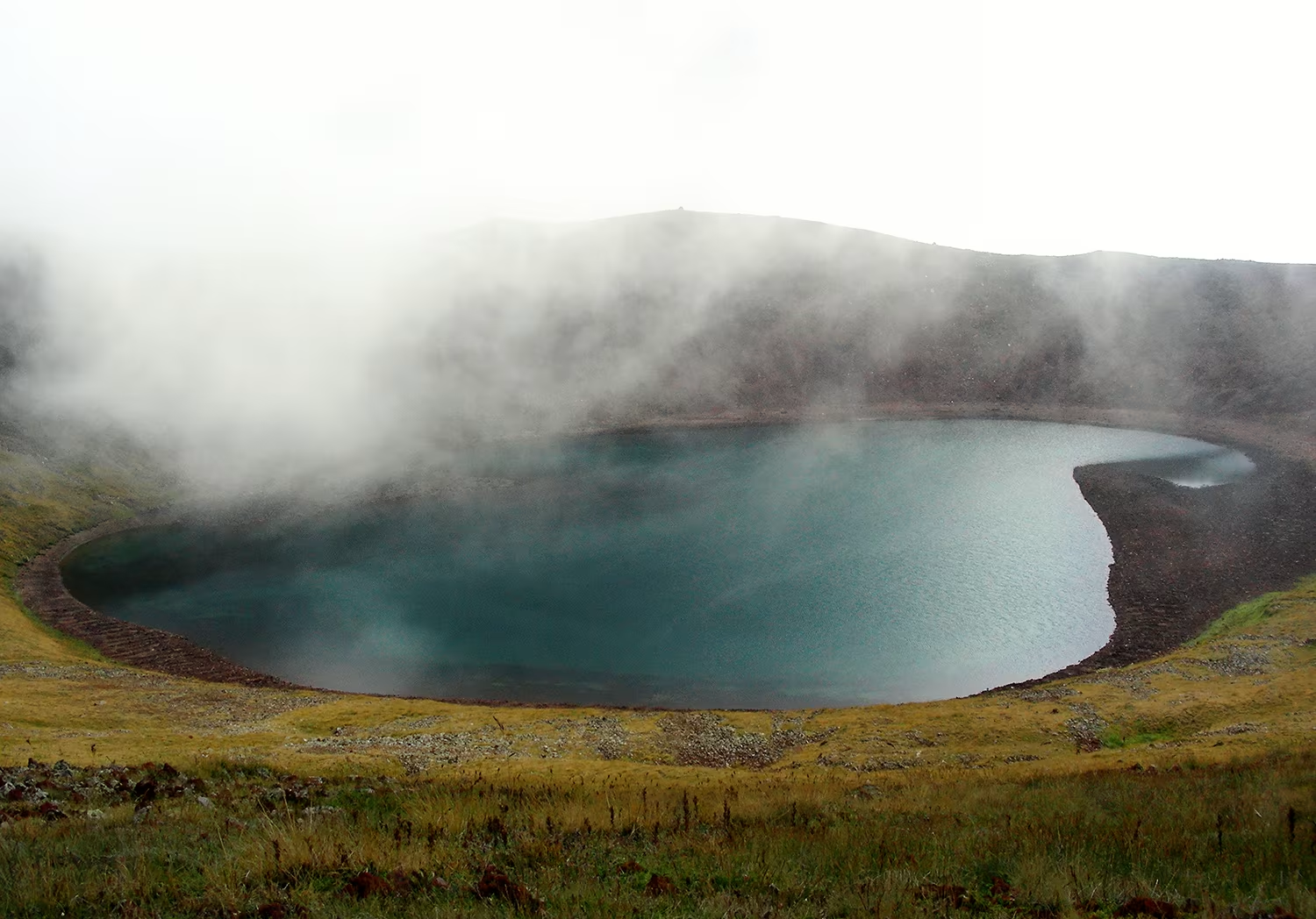
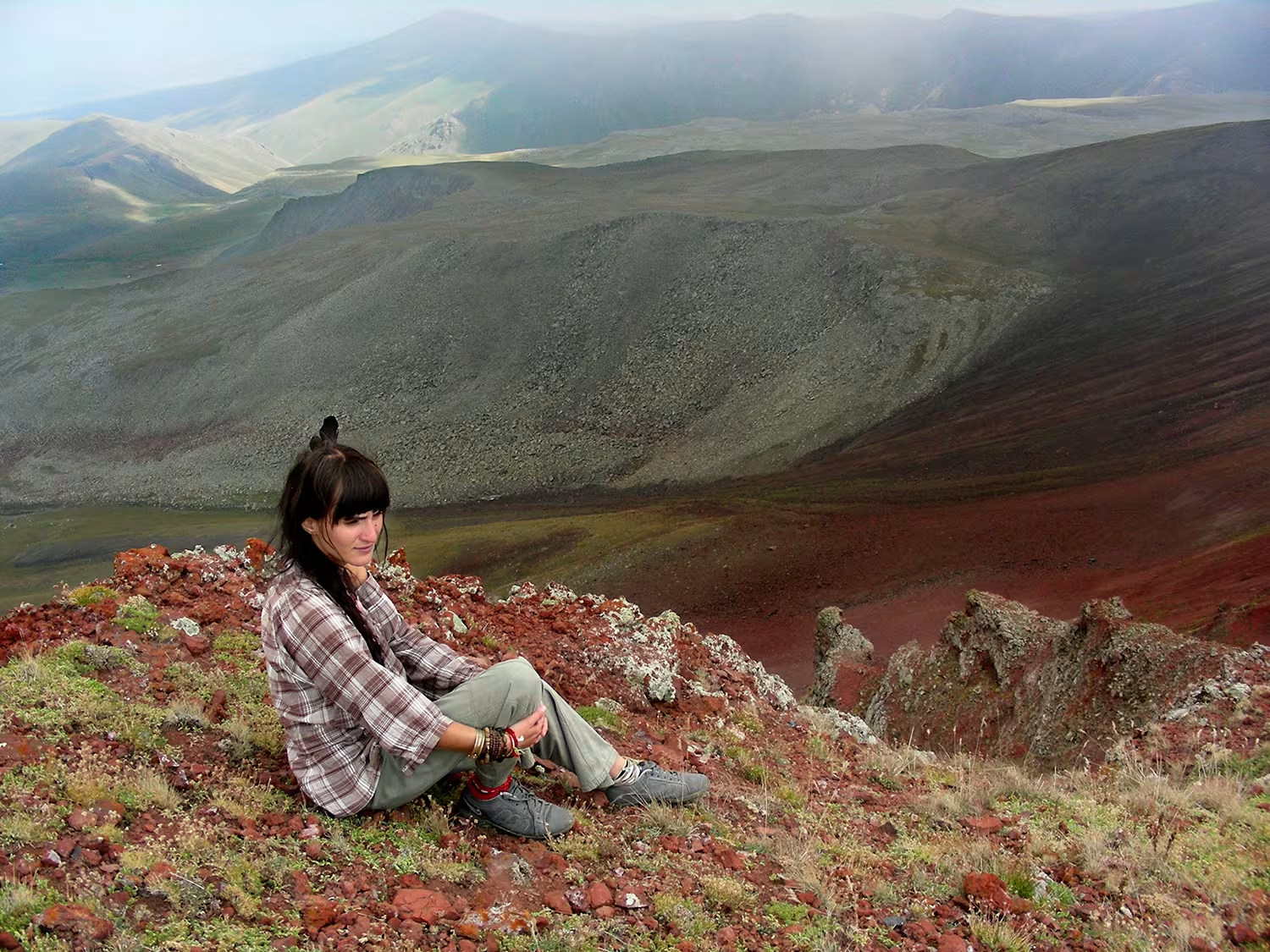
Azhdahak is the highest peak of the Geghama Mountains, standing tall at 3,597 meters. It’s a volcanic mountain of many colors with barren slopes and a stunning crater lake right at the summit. Honestly, it’s a magical place, not just for the views, but for the colors and the raw energy the mountain gives off.
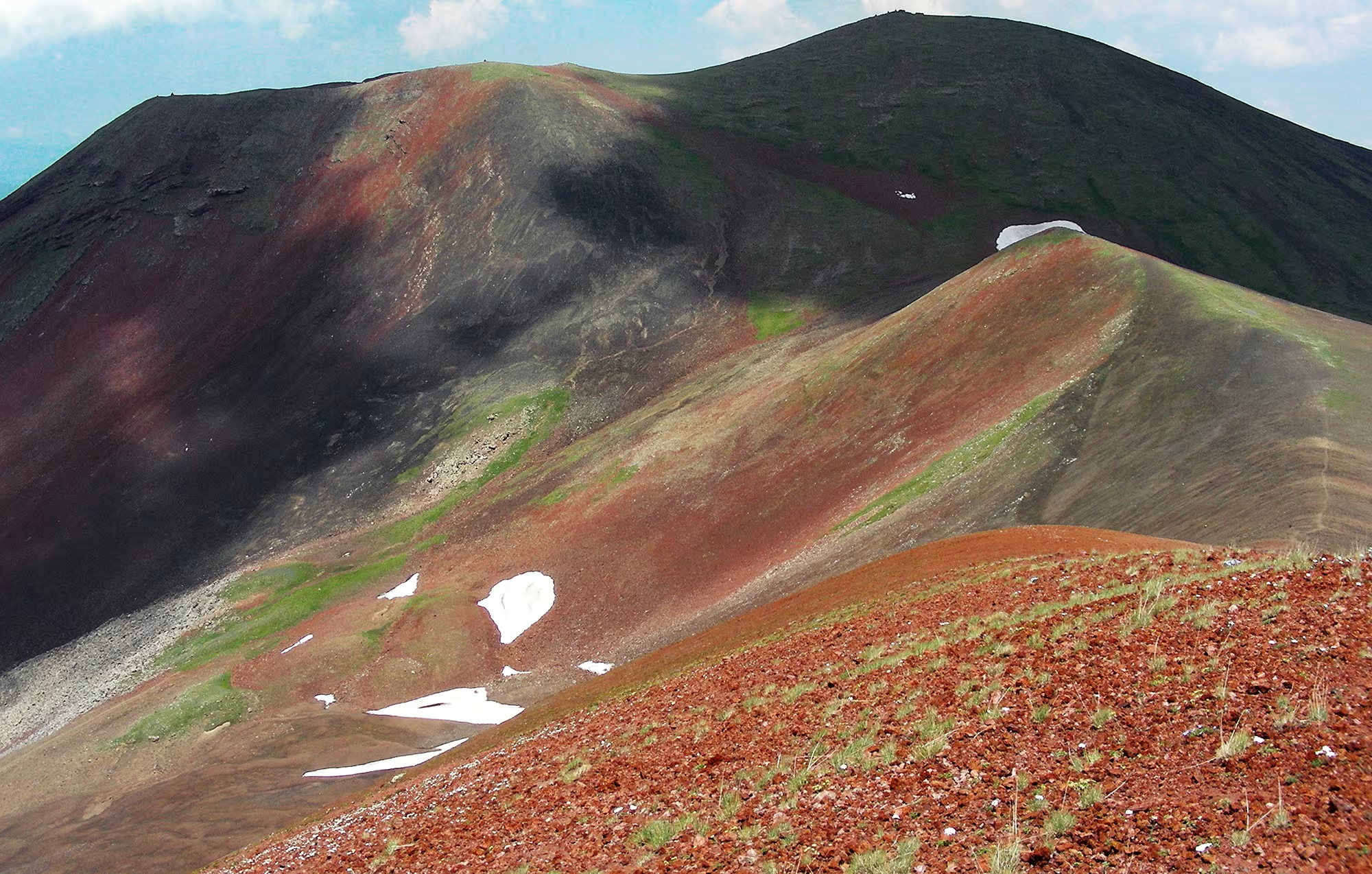
But on that September night on Azhdahak, we weren’t admiring the beauty. We were fighting to survive the mountain, trying to outlast a night that felt endless, find the way, and make sure there were no human losses. It all started when… Well, let me tell it from the beginning so you don’t miss a thing.
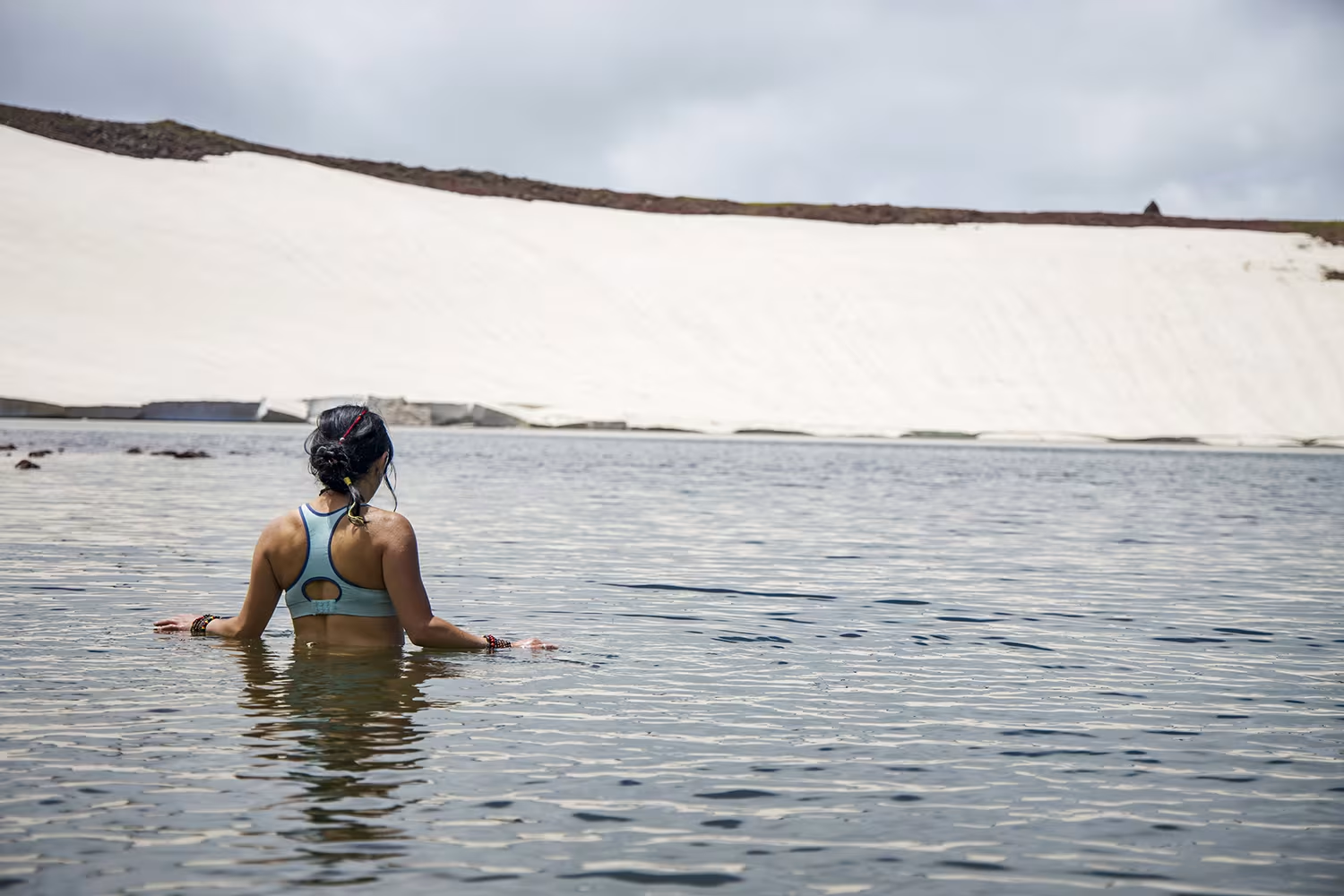
I first visited Azhdahak earlier that same year, on July 12th. My friends had decided that we just had to celebrate my birthday on the summit. Even in July, the crater lake was still surrounded by ice, but that didn’t stop us from jumping in! The water was freezing, clear, and actually quite delicious (I love tasting water from different natural sources).
The weather was sunny and warm. After our dip, we were just lying in the grass, soaking up the sun, when the mountain gave me a “gift”: clouds started rising from below, drifting right over us and rolling down the other side. We stood there, breathless, watching the magic. But it was time to go down before dark. That day, my first meeting with Azhdahak passed without any adventure.
I was so impressed that when my friends said a group was going there again on August 31st for an overnight trip, I decided to join. This group wanted to explore Azhdahak’s dragon stones (vishapakar) and petroglyphs. To be fair, I usually avoid large, unfamiliar groups for hikes, but the temptation of experiencing Azhdahak at night was too strong. The organizers assured us they had been there many times, and on August 31 we set off in a big bus.
We reached Lake Akna by car, set up our tents, and planned to summit the next morning and return to Yerevan. From Lake Akna to the summit is about 8 km, so the plan was to go up and back quickly.
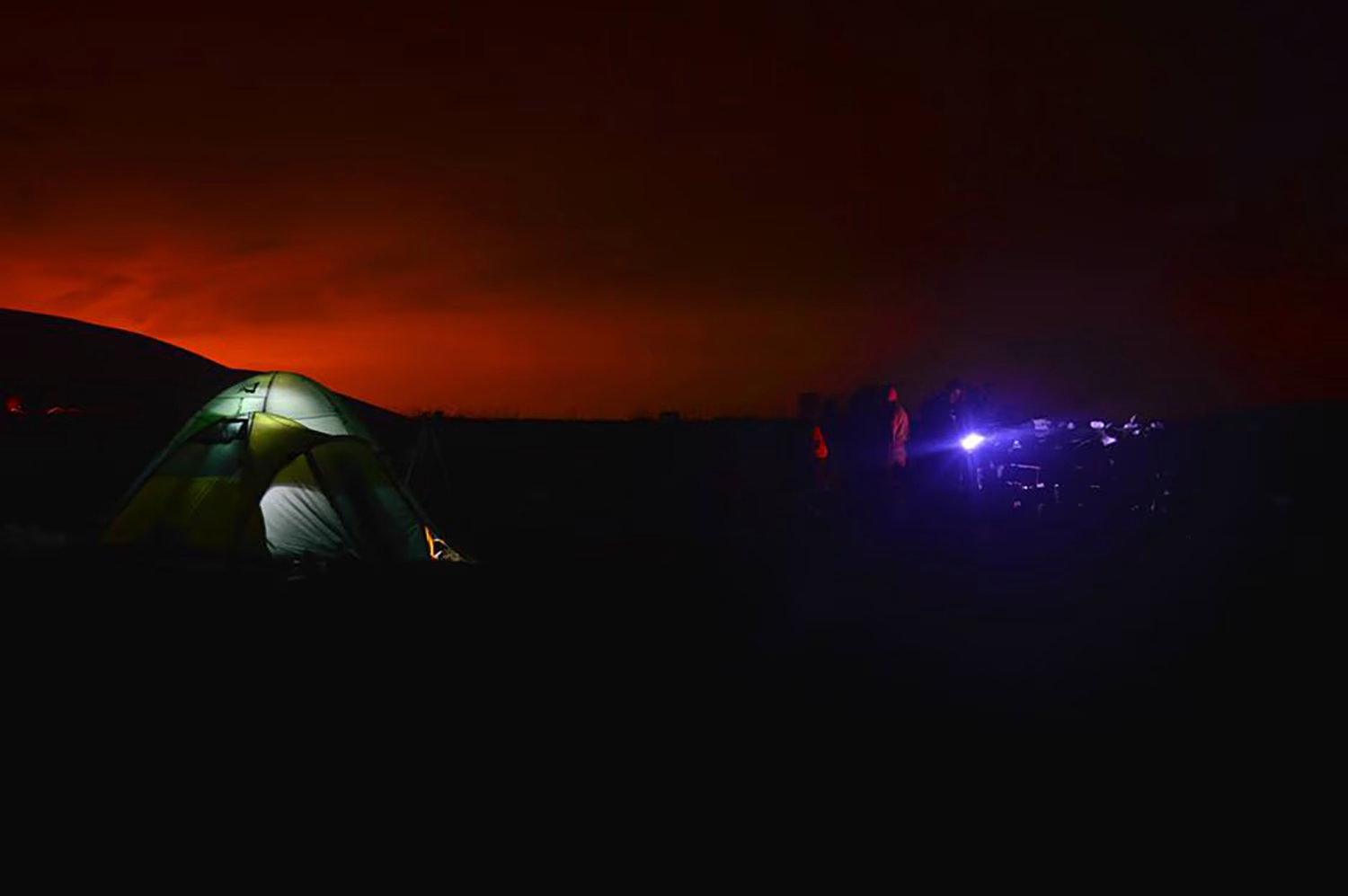
The night was cold-by September, the mountains already carry a sharp chill. We barely slept, squeezed together in big tents, slightly freezing.
In the morning, I ran barefoot on the wet grass, washed in the cold lake, and warmed up under the sun.
At 8:00 AM, we started toward the summit. The group was moving pretty slowly. We approached the base from a different side this time; my first trip had been via the “Red Mountain” and the saddle, but this side was straight up-vertical, sandy, and rocky. Anyone who has been to Azhdahak knows how fragile the stones are there. The guides decided we didn’t have time to go around for the easy route, so they picked the direct climb. For me, it didn’t matter-I was curious to try this route too, to test my strength. After double-checking that they were sure, I started climbing.
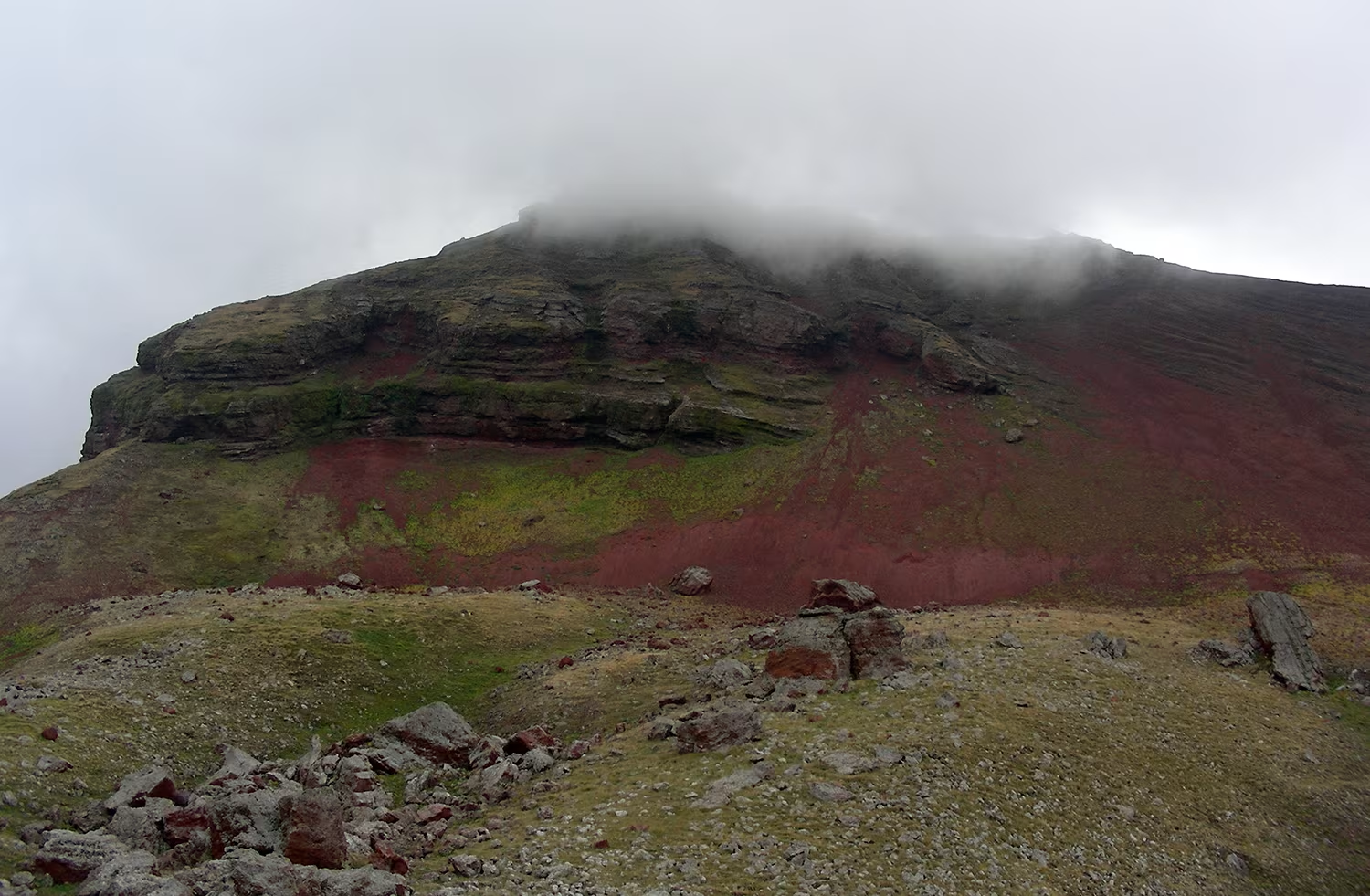
A few of us went ahead since the others were moving slowly. For me, it felt easy- I climbed using my hands, blending into the mountain, drawn toward the summit. This route was more difficult and dangerous, but I loved the adrenaline. We were almost at the top when we heard from below that the group couldn’t continue and asked us to come back down.
There were five of us up there. We shouted back that descending the way we came was way too dangerous; it was smarter for us to hit the summit and take the easy path down. We agreed they’d head back to camp while we’d summit and catch up later.
Just below the peak, at a dangerous section where we had to cross a narrow, unstable path hanging over a gorge with loose rocks underfoot. One of the guys was terrified, and no matter how much we tried to coach him through it, he couldn’t. He ended up calling the rescuers to get him up.
One friend stayed with him, and the three of us reached the summit and decided to wait. Eventually, four others made it up from different routes, so we had seven people at the peak and two just below, waiting for the rescue team. We didn’t want to leave them alone, so we all decided to stay put until everyone was off the mountain.
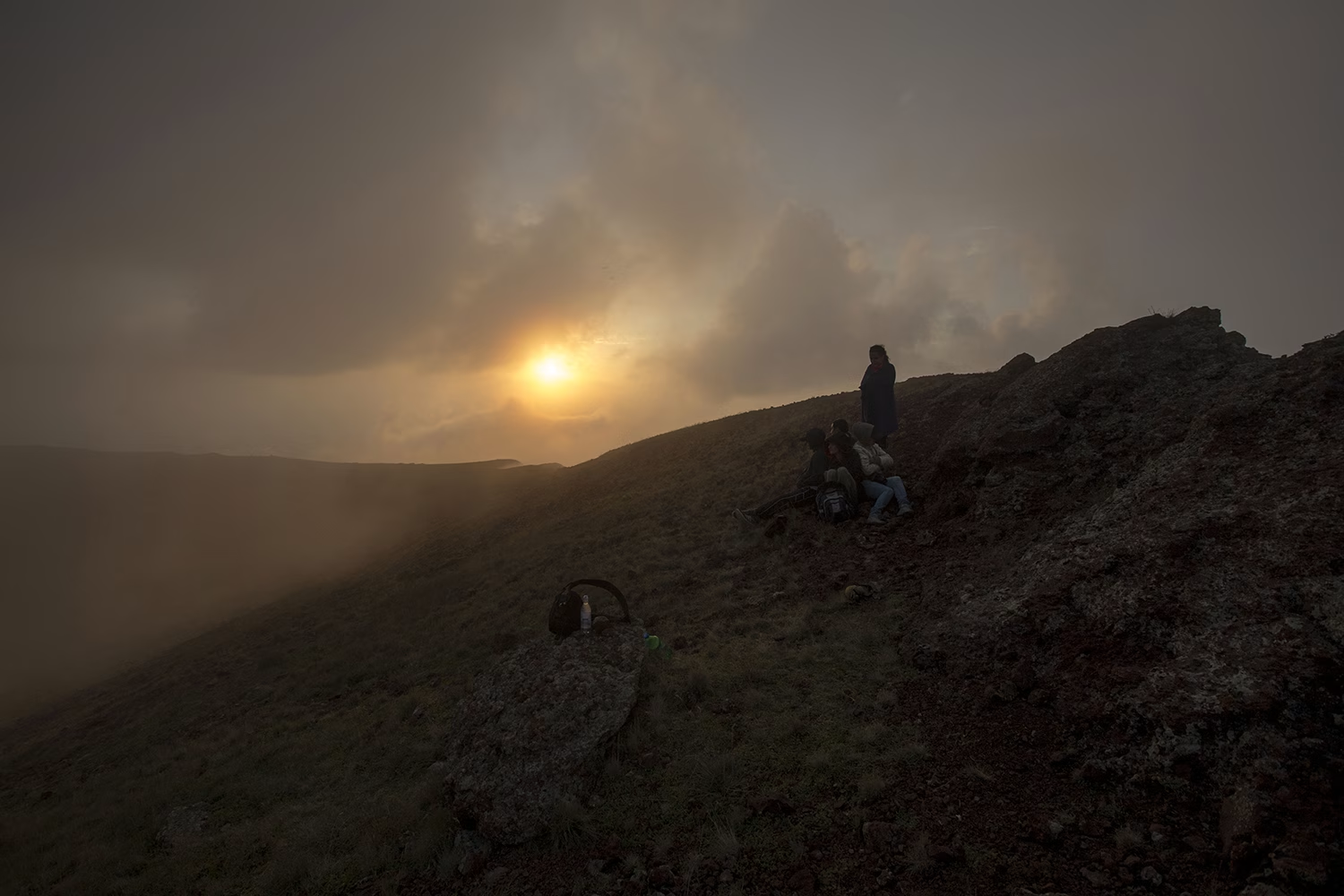
By 2:00 PM, hunger was kicking in. The wind was howling, so the seven of us sat back-to-back in a circle to keep warm. By sunset, we were still there. The sun looked like a giant, perfect fried egg, and we imagined all the food we’d eat back at camp.
Rescuers finally arrived at 8 p.m.-six hours later, when it was already dark. They pulled the guys up with ropes, and we prepared to descend. We knew the way to our camp, but the rescuers asked us to walk with them to their vehicle because one of our group members was there, and they wanted us to guide him back to camp. They swore the car was only 300 meters from our tents.
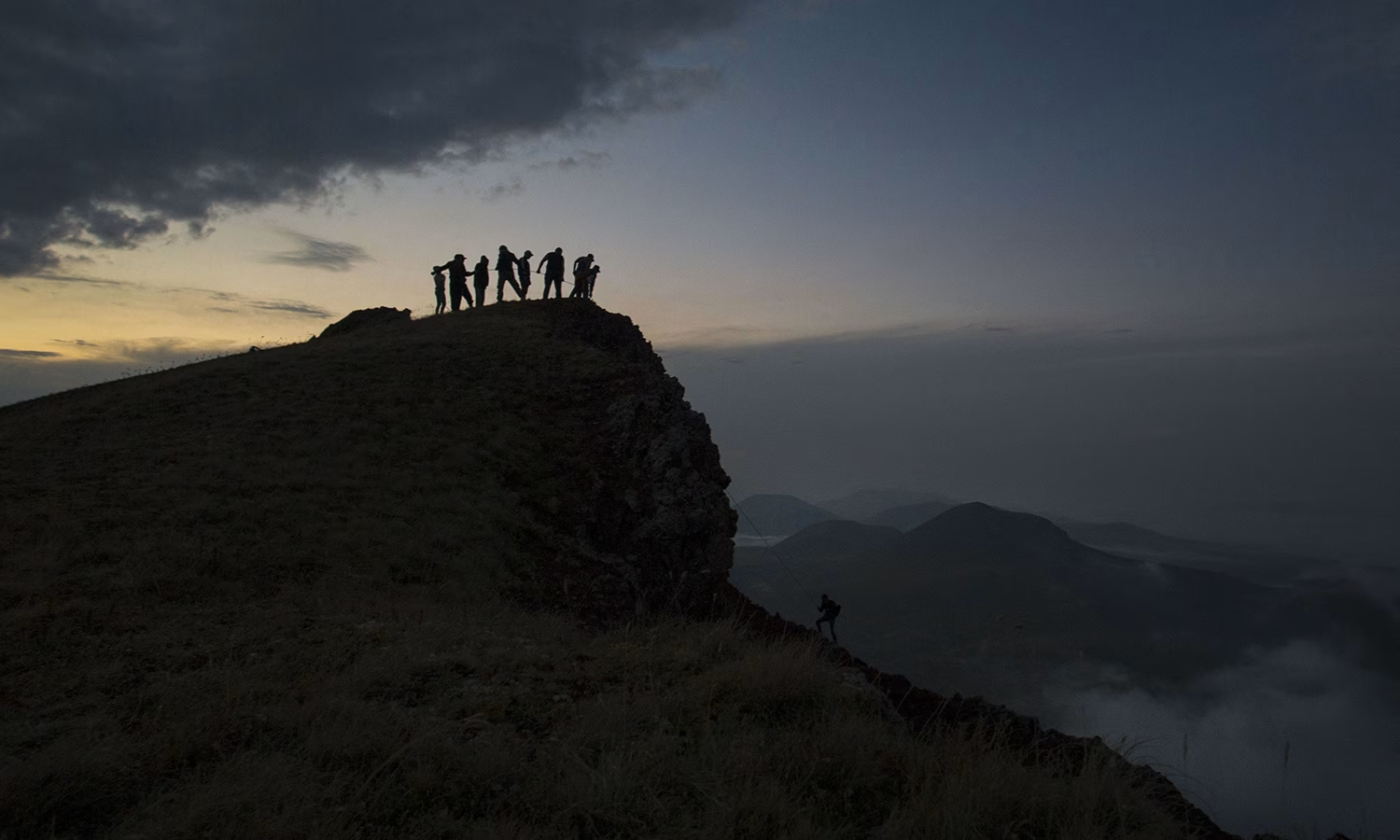
We started descending from the summit in the dark-not via the saddle, and of course not via the steep route we climbed, but down a sandy slope. After some time, we reached the vehicle. It turned out that guy had already left. We said our goodbyes to the rescuers and started walking in the direction they pointed, dreaming of hot tea, warm clothes, and food.
You know those movies where people walk and walk, but everything looks exactly the same, like they’re going in circles? That was us. In the Geghama Mountains at night, every ridge looks like the last one, especially when you don’t know the terrain well. After some time of walking and seeing no camp, we realized we had probably gone off track. This was the most extreme part-surviving a mountain night with no food, no warm clothes, and no fire.
There were nine of us-three girls and six guys, most of us strangers until that day-but we became close friends. We’d walk to stay warm, then sit in a massive group hug to shield ourselves from the wind. There are no trees at that altitude, so no chance of making a fire. The wind was strong, and there was nowhere to hide from it. The only option was to keep moving-to avoid freezing, to either find the camp or wait for daylight.
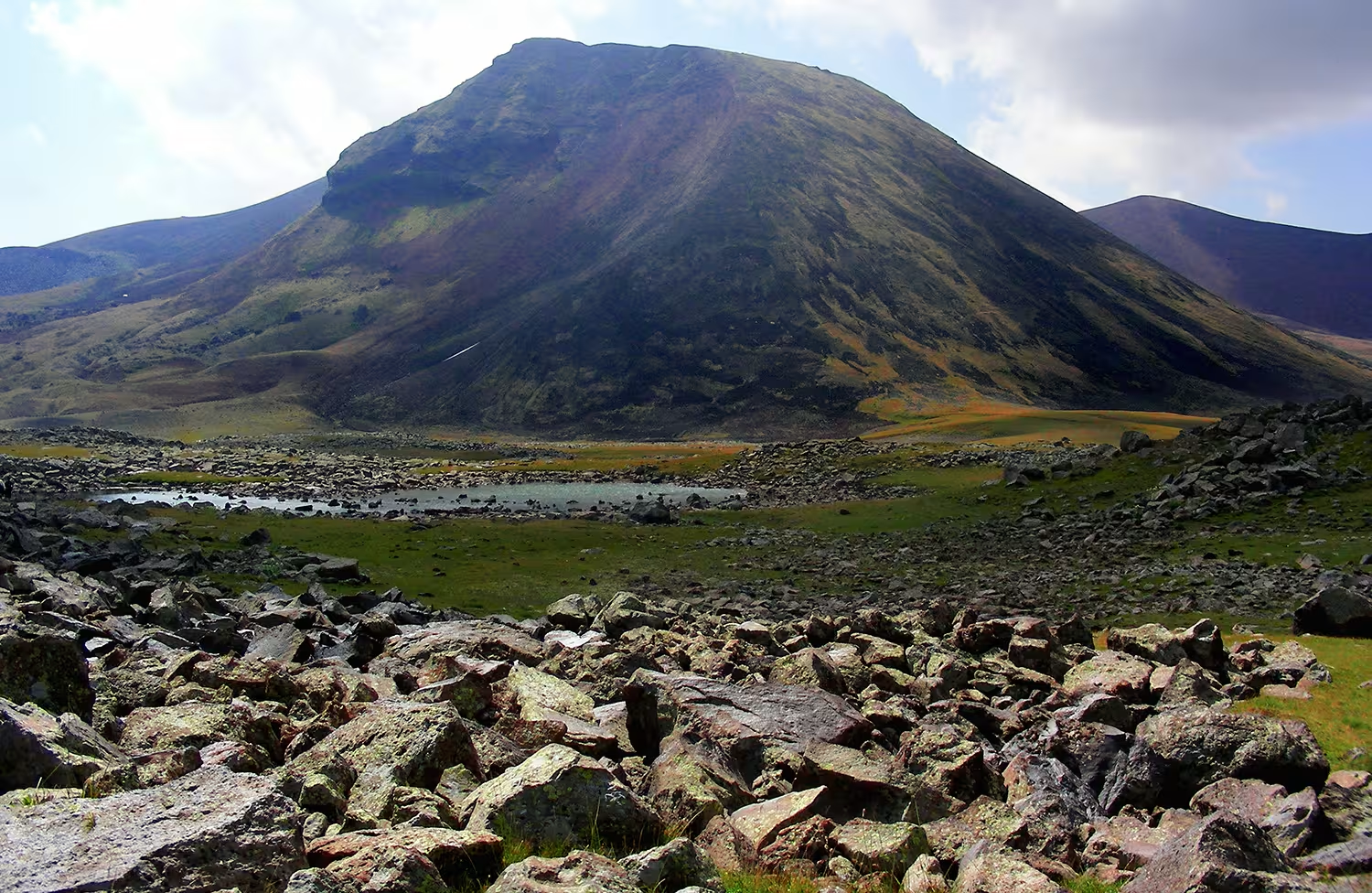
Lightning was flashing in the distance and clouds were rumbling. I spent the night “talking” to the mountain in my head, asking it to hold back the rain, because an autumn downpour would have been the end of us.
There was no cell service, no GPS, and phones back then weren’t that “smart” either.
Beyond the cold, there was also the danger of wild animals, but since we were in a large group, the likelihood of them attacking was low.
At 4 a.m., exhausted from hunger, cold, and fatigue, we heard dogs barking. We followed the sound. In these mountains, Yezidi shepherds live in large tents (called “oba”) during the summer, and barking dogs meant there were shepherd camps nearby.
Around 6 a.m., we reached them-massive Armenian Gampr dogs guarding the area. In the twilight, I saw a silhouette on a nearby hill. I started shouting and talking to it, wondering why there was no response. When it finally turned, I realized I’d been having a one-sided conversation with a horse. It had been facing us, and in the darkness we mistook it for a human.
We carefully approached, talking to the dogs to calm them, and knocked on a window. A very confused half-asleep young shepherd opened his door, surprised to see a group of people in the mountains at that hour. He invited us into his kitchen and gave us hot tea. For the first time, we could finally relax, sit, and warm up.
At sunrise, the shepherd led us back to our camp, where our worried friends and families were waiting. We told them what had happened, and they started driving people down to the village. By the time we got there, the camp was already packed up-so no hot meal, no tea, no warm bed waiting for us until we got home.
While waiting for the cars, an older shepherd heard our story. He told us we should perform a matagh (a traditional sacrifice) because we were lucky to be alive. But since I find it unacceptable to kill another living being for my survival, I suggested something else-that I would sacrifice a lock of my hair instead. We cut a small piece of my hair with a knife, gave it to the wind, and thanked the mountain for taking care of us.
This adventure taught me a lot. It was an intense and fascinating experience. I wasn’t afraid at any point-I somehow trusted I would get through it. In situations like this, it’s crucial not to panic. Panic only makes things worse-you start making bad decisions. You need to stay calm and think clearly about how to get out.
I also realized how important it is who you go into the mountains with. This situation could have been avoided if the group leader had been skilled and prepared. And I understood that you must always be ready for different scenarios-carrying the necessary gear, even if the route seems short and easy. At the very least: rope, headlamps, GPS, warm clothes, food, a first aid kit (one of the guys had a high fever), and signal lights would have helped a lot-the rescuers were searching for us after some families raised the alarm.
I also learned that a local’s version of “300 meters” doesn’t always mean exactly 300 meters-it can easily turn into several kilometers! Or the other way around: they might tell you something is “very far” when it’s actually just a few hundred meters. In our case, the distance from the car to the camp was actually a few kilometers. And when you’re walking expecting 300 meters and don’t find the camp, you start to feel like you’re lost, like you’ve gone off the path.
But the most important thing I understood is this: mountains are not to be underestimated. You don’t go to “conquer” them. We go to connect-with the mountains, with nature-and it’s the mountain that decides how much it will allow.
That day, Azhdahak was watching over us from above-keeping its wild creatures away, holding back the storm in the distance. And somehow, the whole time, I could feel its caring presence.
More About Azhdahak Tour
Ready for an Adventure?
Join our group of explorers and see Armenia from a different perspective. Custom dates and private tours are also available.